
Jim’s older brother John, who lived in Georgia, had raised peafowl as a hobby for years. Their peafowl were kept in a huge covered pen. Jim had helped John build the massive pen years back when he started his peafowl adventure. John had attempted to breed the birds, though was never successful. I remember his commenting about different issues that hindered their attempts. One year the nest and eggs were covered in ants, one year all eggs were found broken. The one and only time a chick hatched, they took it in the house to raise and the poor little guy got his head stuck in the refrigerator door and broke his neck.
John died in 2006 from a long battle with cancer. He left his flock of peafowl to Jim. In the Georgia flock of 8 that came to the farm were 2 white peahens, 3 black shoulder peacocks, 1 Cameo peahen, and a mating pair of Indigo Blues. 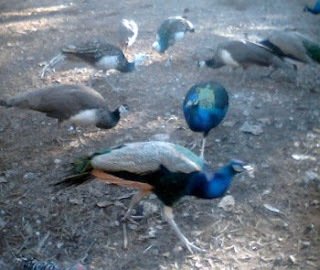
Unfortunately we lost the 2 whites and Cameo hens. One white ventured off to another farm and was fatally wounded by a dog. They brought her back, though she did not live long after I treated her wounds. The second white was killed while roosting when an ice covered tree limb plummeted to the ground during the January 2007 ice storm. The Cameo died unexpectedly of an unknown cause. We have lost a couple of the original males, they wander off and never come home. 
Sparky would walk a mile up our drive across the gravel country road and follow behind the tractor while one neighbor cut his hay fields. He also would annoy the snot out of our other neighbors at times on his return walk home. They enjoyed his visiting until he decided he didn’t like their grandchildren. Other neighbors have commented that can hear and enjoy the calls and sounds of the peacocks from a distance. 
Each year Olive our first peahen and one other female have given us new chicks. The mortality rate is high here. Since the birds free range, they are easy prey to predators. It is survival of the fittest and normally 2 out of 4 peachicks survive. I have read that they lay 2-6 eggs to a nest. The girls are so protective of their young, if you attempt to get too close they will rush the babies away. I have never gone looking for their nests, but occasionally while out in the bottom pasture I can spot the girls setting in the dense underbrush.

A few facts about peafowl –
They can live 30+ years.
They do not begin mating nor do females lay eggs until approx. 2 years of age.
Males shed their feathers once a year.
The longer the train of feathers normally is an indication of an older bird.
They can fly, but not far.
They roost in trees at night.
They do roam a mile from the farm and have gone as far as 3 miles. Most return, some don’t.
They will eat baby chicks (chickens).
Ours do not fight with other farm animals, the males do spar back and forth between themselves. The peahens will sometimes flog a chicken if they are too close to their feed.
They enjoy walking on the roof.
They leave their calling cards on all they roost on...fences, decks, porches, cars and banisters.
Their colors are more brilliant if free ranging versus caged.
They are not quiet birds, they honk, scream and caw. (Just ask our neighbors)

Oh and yes we sell their feathers. We have eye feathers, sword feathers and trimmed or natural length. They make beautiful arrangements, crafts, ornaments and jewelry.


